
ESL Clothes Bingo Cards (Free Printable Generator)
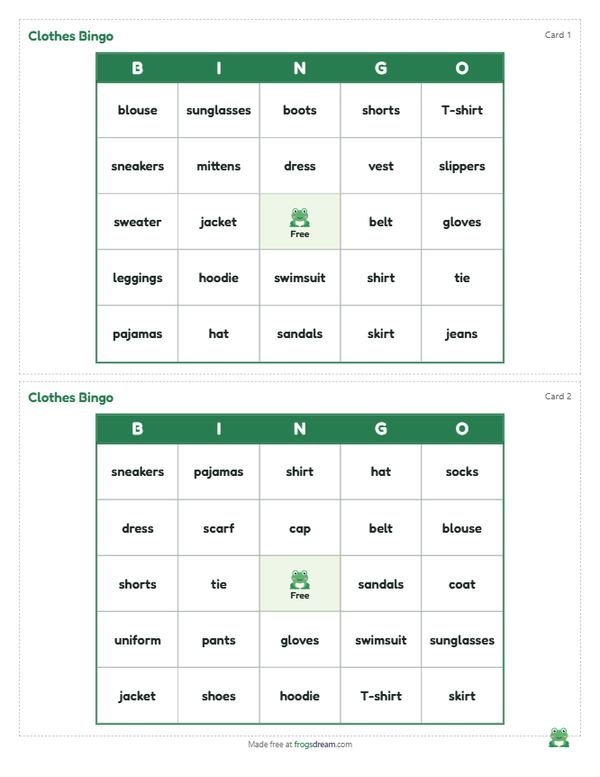
Make free clothes bingo cards for English learners with 32 everyday clothing words, from socks and shoes to raincoat and sunglasses. Each card comes out different, so the whole class can play at once.
Loading your preview...
Need 40 ready-made cards for every theme, plus caller sheets, in one download? Get the Mega Pack
The word list
The words use American names, so you will see pants and sneakers rather than trousers and trainers. Swap in the British forms if that is what your learners will meet, and add anything your class actually wears, such as a headscarf or a school blazer.
- shirt
- T-shirt
- blouse
- sweater
- hoodie
- jacket
- coat
- raincoat
- vest
- dress
- skirt
- pants
- jeans
- shorts
- leggings
- pajamas
- swimsuit
- uniform
- socks
- shoes
- boots
- sneakers
- sandals
- slippers
- hat
- cap
- scarf
- gloves
- mittens
- belt
- tie
- sunglasses
How clothes bingo works, in the room or on a call
The nice thing about clothing vocabulary is that the flashcards are already walking around your classroom. Everyone is wearing half the list. That makes this one of the easiest topics to teach without preparation and one of the most natural to turn into speaking, because "What are you wearing?" is a question with an obvious answer.
- Start by pointing. Touch your own sleeve, shoe or collar, say the word and have the class copy. Ask a volunteer to stand up and let the class name three things they have on.
- Deal out cards and counters. Buttons are the obvious choice here, and they fit the theme.
- Call a word by saying it, by pointing at someone who is wearing it, or by miming putting it on. Pulling an invisible sweater over your head gets a laugh every time.
- Learners with the word cover it and touch the real item if anyone in the room has it on.
- First full line wins. The winner reads the line while the class checks whether anyone is wearing each item.
- Swap cards with a neighbor and play again, this time without pointing or miming.
For an online lesson, learners can show the camera what they are wearing, and you can hold up items from your own closet. Share the bingo caller on screen so the word appears large as you say it.
Ways to turn the round into speaking practice
- Say it, then cover it. A square can only be covered after a sentence: "I am wearing jeans today" or "She has a red scarf." Beginners can use "This is a hat."
- Weather calls. Instead of the item, call the weather: "It is snowing." Learners cover one piece of clothing that fits and explain why. Mittens and boots are easy; a tie needs a story.
- Fashion show. The winner describes an outfit using at least four words from the card, and the class draws it. Comparing the drawings afterward shows who listened.
- Pack a suitcase. Call a destination such as the beach or the mountains, and learners cover something they would pack. It mixes clothing with places and reasons.
Teaching notes on clothes vocabulary
Plurals are the quiet lesson here. Pants, jeans, shorts, pajamas and sunglasses are always plural in English, and learners from many language backgrounds want to say "a pant" or "a jean." Say "a pair of" whenever you call one of them, and the pattern settles in without a grammar explanation.
Six to eight year olds do best with the clothes they put on themselves every morning: shirt, pants, socks, shoes, coat, hat. Cut the list to those and use a 3x3 grid. Adult beginners can take the full list and will often ask for shopping words next, such as size, price and fitting room, which make a good follow-up lesson.
Watch the first sounds in shirt, shoes and shorts, which many learners soften or swap with the s in socks and sandals. A minute of listening practice with those pairs before the game pays off during it.
What to do with the winning card
Ask the winner to pick five words from the card and describe what a classmate is wearing, without saying the name. The class guesses who it is. It takes two minutes and gives every learner a reason to listen closely to clothing words.
Printing tips for clothes cards
For a class, print two cards per page and cut; for a tutoring pair, print one per page so there is space to sketch a tiny picture by each word. Younger learners enjoy coloring the clothes as they are called, which turns a black and white card into a record of the round.
If you reuse the set across a term, cardstock or a laminating pouch saves reprinting. Ink saver mode keeps toner use low, and both Letter and A4 are available in the options.
FAQ
Does the list include underwear or anything awkward for a class?
No. The 32 words are outer clothing, shoes and accessories only, which keeps the game comfortable for children and for adult groups from different cultures.
How do I teach the plural words like pants and jeans?
Call them with "a pair of" every time, and have learners repeat the phrase before they cover the square. After the game, list the always-plural words on the board and let the class spot the pattern.
Which words suit a first lesson with six year olds?
Shirt, pants, socks, shoes, hat and coat are the ones they handle every day. Trim the list to about nine words, pick the 3x3 grid, and let them point at their own clothes as they cover each square.
Can I use British words instead?
Yes. Edit the list above to say trousers, trainers, jumper or wellies, and the cards update at once. Some teachers print both versions so learners see that English varies by country.